Last-Minute Guide
How to Prepare for a Job Interview in 24 Hours
By Elara T · August 2026 · 7 min read
Your interview is tomorrow. You just found out, or maybe you kept putting off preparation. Either way, here you are — 24 hours on the clock, and the pressure is on.
Take a breath. You are not doomed. The truth is that most interviewers are not expecting you to have encyclopedic knowledge of their company or perfectly rehearsed answers to every possible question. What they are looking for is someone who shows up prepared, communicates clearly, and demonstrates genuine interest in the role. You can absolutely do that in 24 hours.
This guide gives you a step-by-step countdown plan — from tonight through the moment you walk into the room (or join the video call). Follow it in order, do not skip the basics, and you will walk in more prepared than 80% of candidates. If you are short on time, jump to the quick-fix section below.
Before we dive in, know this: the single fastest way to sharpen your answers is to practice them out loud. You can rehearse with our AI interview coach right now — it takes 10 minutes and gives you immediate, honest feedback on delivery, structure, and pacing. It is the closest thing to a dress rehearsal you can get tonight.
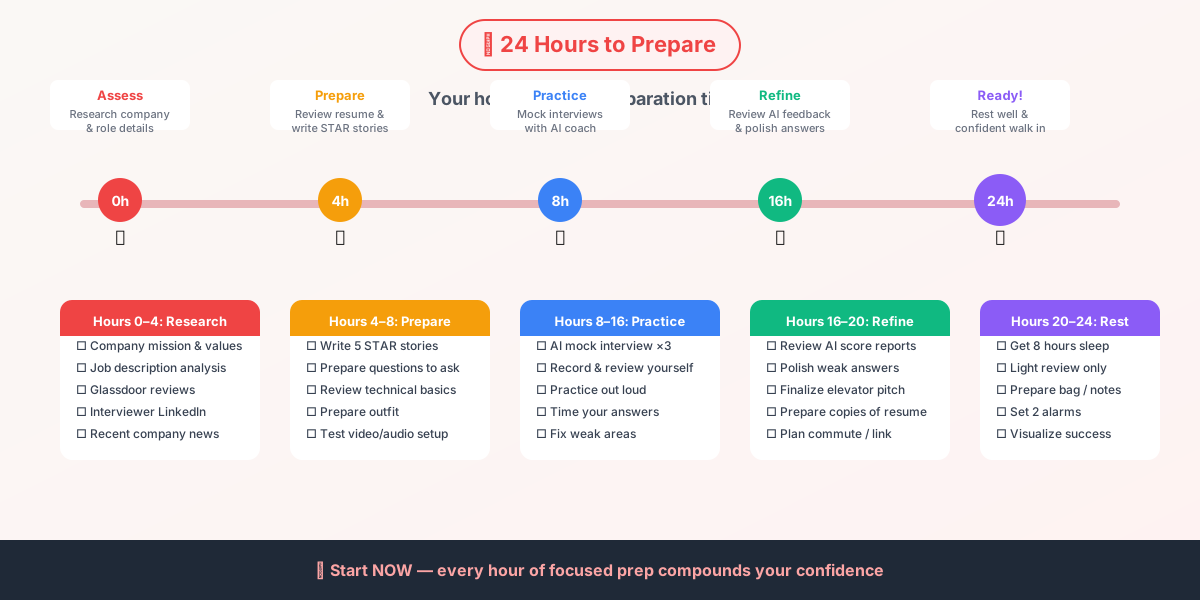
🌙 The Night Before: Lay the Foundation
This is your most valuable preparation window. You have quiet time, no distractions, and enough runway to get organized without rushing. Spend 90 minutes to two hours on these four tasks, then stop and sleep.
1. Research the Company (30 minutes)
You do not need to become an expert overnight. Focus on three things: what the company does, who its customers are, and what has happened recently. Start with the company homepage, skim the About Us page, and do a quick search for recent news or press releases. Write down one thing that genuinely excites you — a product, a mission statement, a recent funding round, or an interesting team initiative. This becomes your answer when they ask, “Why do you want to work here?”
For a deeper dive into how to answer “Tell me about yourself”, read our dedicated guide. Knowing the company context makes your answer land much stronger.
2. Review Your Resume (15 minutes)
Pull up your resume and read it as if you are the interviewer. For each role listed, prepare one sentence that explains what you did and one result you achieved. Focus on the last two to three positions — those are what interviewers will ask about most. If there are gaps or transitions, prepare a brief, honest explanation. The goal is to ensure nothing on your resume catches you off guard.
3. Prepare Your Outfit and Logistics (15 minutes)
Lay out your clothes. Make sure they are clean, pressed, and appropriate for the company culture. If it is a video interview, test your camera, microphone, and internet connection. Confirm the time, location (or video link), and the name of your interviewer. Charge your phone. Print a copy of your resume if it is an in-person meeting. Eliminating logistical surprises frees up mental energy for the actual conversation.
4. Prepare Three STAR Stories (30 minutes)
Most behavioral interview questions follow the same pattern — they ask you to describe a situation where you demonstrated a specific skill. The STAR method (Situation, Task, Action, Result) is the gold standard for structuring these answers.
Prepare three versatile stories: one where you solved a difficult problem, one where you worked with or led a team, and one where you dealt with conflict or failure. Write down bullet points — not a script — and practice saying each one in under two minutes. These three stories can be adapted to answer the majority of behavioral questions you will face.
Want to pressure-test your stories? Practice with AI feedback to see if your answers are structured, concise, and compelling. It takes minutes and reveals blind spots you would not catch on your own.
5. Sleep Early
This is not optional. A sleep-deprived brain cannot think on its feet, read social cues, or project confidence. Set an alarm, put your phone on do not disturb, and get seven to eight hours. You have done the work — now let your brain consolidate it overnight.
☀️ Morning Of: Sharpen Your Edge
Resist the urge to frantically study all morning. Overloading yourself right before the interview creates anxiety, not preparedness. Instead, follow this focused morning routine.
Review Key Points (15 minutes)
Re-read the notes you made last night: the one thing you like about the company, your three STAR story bullet points, and the key responsibilities from the job description. Skim — do not deep-read. The goal is to refresh what you already know, not cram new information.
Practice Your Self-Introduction (10 minutes)
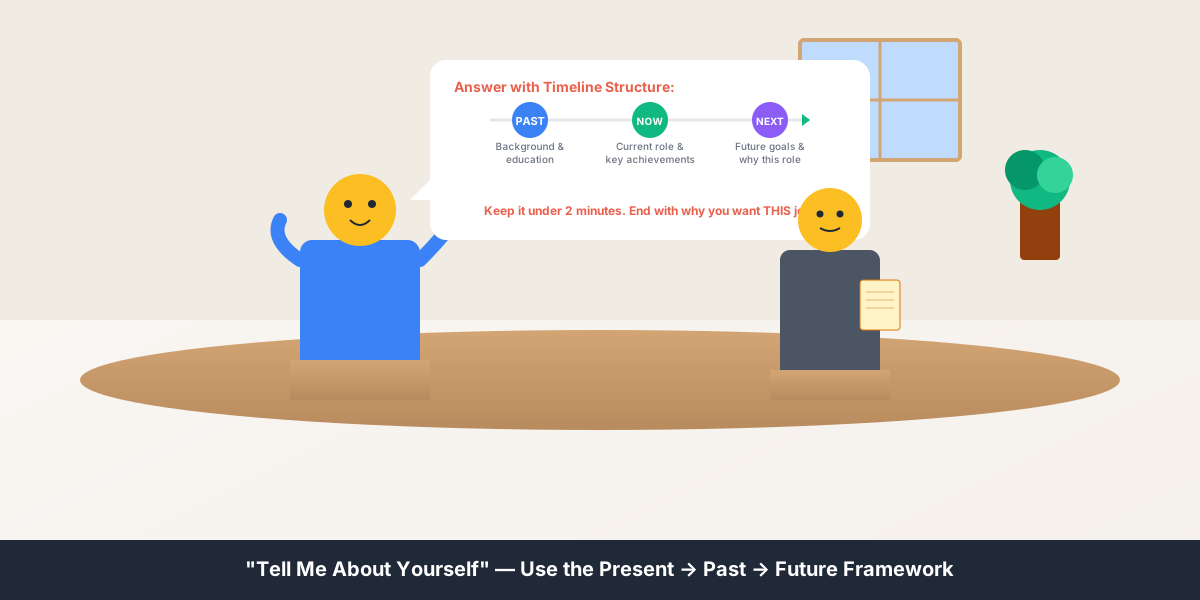
Say your self-introduction out loud three to five times. Keep it under 90 seconds. Use the Present-Past-Future framework: what you do now, one relevant past achievement, and why this role excites you. If you stumble, simplify. A clean, confident delivery of a simple answer beats a rambling, overambitious one every time.
Eat a Proper Meal
Your brain runs on glucose. Eat a balanced breakfast or lunch — protein, complex carbs, and water. Avoid heavy sugar that will crash your energy mid-interview. If nerves kill your appetite, at least eat a banana or a handful of nuts. Caffeine is fine in moderation but do not overdo it — jitters and rapid speech are not your friends in an interview.
⏰ One Hour Before: Get Centered
This is your transition zone. You are shifting from preparation mode to performance mode. What you do in this hour sets your emotional state for the entire interview.
Deep Breathing (5 minutes)
This is not woo-woo advice — it is neuroscience. Slow, deep breaths activate your parasympathetic nervous system and reduce cortisol. Try box breathing: inhale for four counts, hold for four, exhale for four, hold for four. Repeat five times. This physically calms your body and sharpens your focus. Do it in the parking lot, in the bathroom, or at your desk before the video call.
Quick Review of STAR Stories (10 minutes)
Glance at your bullet points one last time. Do not rehearse word for word — just refresh the key beats: the situation, what you did, and the result. If you practiced with AI the night before, recall the feedback you received. This quick review ensures your stories are right at the surface of your memory when you need them.
Power Posture and Positive Self-Talk
Stand up straight, roll your shoulders back, and take up space. Research shows that expansive postures can reduce stress hormones and increase feelings of confidence. Tell yourself: “I am prepared. I have something valuable to offer. This is a conversation, not an interrogation.” It sounds simple, but reframing the interview as a two-way conversation reduces anxiety significantly.
🎯 During the Interview: Stay in Control
You have prepared. Now it is time to execute. Here is how to stay calm and sharp once the questions start coming.
⚡ Quick-Fix Tips: When You Are Really Short on Time
If you are reading this with less than an hour before your interview, skip the full plan and do these five things right now:
- Read the job description twice. Highlight the top three skills or requirements. These are what the interviewer cares about most.
- Write down three bullet points for your self-introduction: your current role, one achievement, and why you want this job.
- Pick one STAR story you can adapt to multiple questions. A strong problem-solving story works for conflict, teamwork, and leadership questions with minor adjustments.
- Skim the company homepage. Read the mission statement and one recent news article. That is enough to sound informed.
- Take five deep breaths. Box breathing: 4 counts in, 4 counts hold, 4 counts out, 4 counts hold. Repeat. You will feel the difference immediately.
Even with minimal prep, you can make a strong impression. Focus on being present, genuine, and clear. Most interviewers value attitude and communication skills as much as technical knowledge.
🤖 Get a Quick Practice Session Before Your Interview
The fastest way to build confidence before an interview is to practice your answers out loud — and get real feedback. Our AI interview coach simulates real interview conditions, asks you common questions, and gives you instant feedback on structure, filler words, pacing, and content quality.
Even a single 10-minute session can make a noticeable difference. You will hear yourself answer questions in real time, catch habits you did not know you had, and walk in with the confidence that comes from having already done a practice round.
Start a free practice session now →
Interview Tomorrow? Practice Now.
Get instant AI-powered feedback on your answers. Practice your self-introduction, STAR stories, and common questions — all in under 15 minutes.
Start Practicing Free →Frequently Asked Questions
Can I really prepare for an interview in just 24 hours?
Yes — but you need to be strategic. You will not learn everything about the company or master every question type in 24 hours. The goal is to prioritize the highest-impact activities: understanding the company, preparing your key stories, practicing your self-introduction, and getting your logistics sorted. Twenty-four hours of focused preparation beats two weeks of scattered, passive reading every time.
What should I do if I only have one hour before the interview?
Focus on three things: take five deep breaths to calm your nerves, review your three strongest STAR stories so they are fresh in your mind, and re-read the job description one final time to anchor yourself on what the role requires. Do not try to learn anything new. Confidence and clarity matter more than cramming at this point.
How do I prepare my self-introduction quickly?
Use the Present-Past-Future framework. Write three bullet points: what you do now, one relevant past accomplishment, and why you are excited about this role. Practice saying it out loud three to five times until it feels natural. Aim for 60 to 90 seconds. If you want real-time feedback on your delivery, practice with our [AI interview coach](/practice) — it takes just a few minutes and catches filler words, pacing issues, and weak structure automatically.
What if I have not researched the company at all?
Spend 20 minutes on three things: the company homepage (mission and products), the About Us page (recent news or milestones), and the job description itself. Write down one specific thing that genuinely excites you about the company — a product, a value, a recent announcement. Mentioning this in your answer shows preparation without requiring hours of deep research.
Should I practice with AI before my interview?
Absolutely. Even a single 10-minute AI practice session can dramatically improve your performance. An AI coach gives you instant, honest feedback on your answers without judgment. You can rehearse your self-introduction, practice behavioral questions using the STAR method, and identify filler words or weak points before the real interview starts. It is the fastest way to build confidence when time is limited.