6 Best Alternatives to Pramp for Interview Practice (2026)
Pramp is a solid free option for peer-to-peer mock interviews, but it has real limitations — scheduling friction, inconsistent feedback quality, and no AI analysis. I spent three weeks testing every major alternative to find what actually helps you prepare faster. Here's what I found.
Quick Picks
Best overall: StarInterview
AI-powered feedback, on-demand practice, generous free tier. No scheduling required.
Best for live practice: Interviewing.io
Real engineers from FAANG companies conduct your mock. Premium but high quality.
Best free peer practice: Pramp
Free peer-to-peer interviews with video. Good for getting used to live pressure.
Side-by-Side Comparison
| Tool | Price | AI Feedback | Mock Type | Video Review | Scheduling | Free Tier |
|---|---|---|---|---|---|---|
| StarInterview | Free / $15/mo | Yes — detailed | AI-powered | Yes | On-demand | Yes |
| Pramp | Free | No | Peer-to-peer | Yes | Required | Yes |
| Interviewing.io | $100–225/session | No | Expert coach | Yes | Required | Limited |
| Exponent | $79/year | Yes — basic | AI + community | No | On-demand | Limited |
| Preplaced | ₹500–2,000/session | No | Peer + coach | No | Required | No |
| Anonymous Mock Interviews | Free / donations | No | Peer-to-peer | No | Required | Yes |
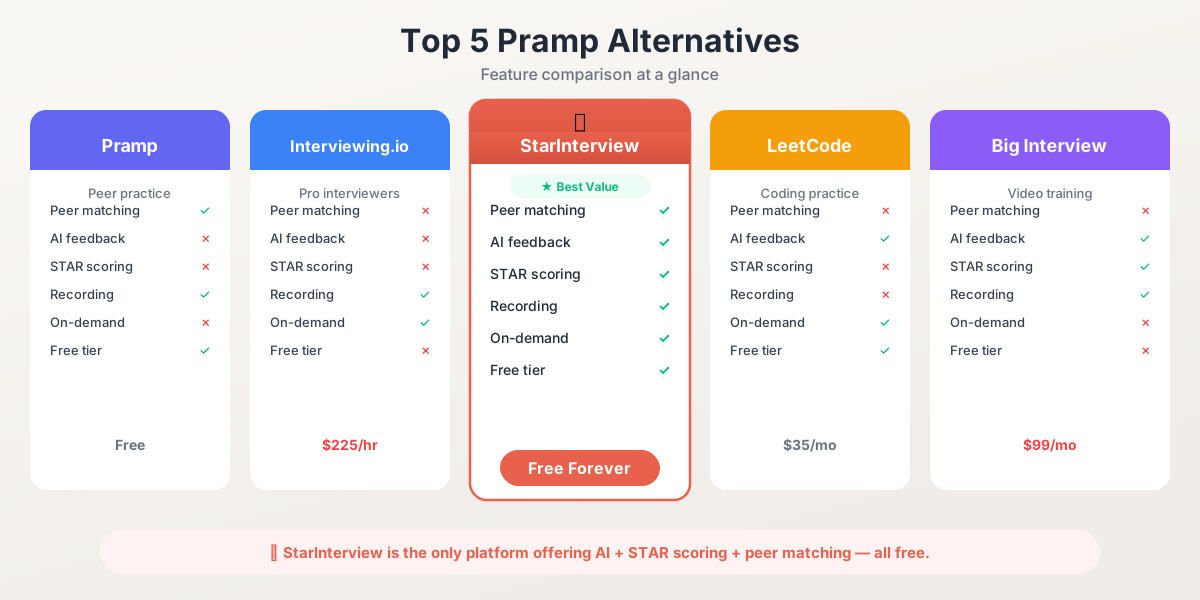
Visual comparison of the top Pramp alternatives by features and pricing.
Why Look Beyond Pramp?
Pramp deserves credit — it proved that free mock interviews between peers could work. The platform has helped hundreds of thousands of candidates prepare for technical and behavioral interview practice. But if you've used Pramp recently, you've probably noticed its limitations.
The biggest issue is scheduling. You can't just open Pramp and practice — you need to book a slot, wait for a match, and hope your partner shows up. When motivation strikes at 10 PM on a Tuesday, Pramp can't help you. And when your partner does show up, the feedback quality is a coin flip. Some peers give thoughtful, structured feedback. Others give you a thumbs up and move on.
The tools below each solve different problems. Some give you AI feedback that's available 24/7. Others connect you with expert coaches. A few combine both approaches. The right choice depends on your budget, timeline, and how much practice you need.
In-Depth Reviews: Each Alternative Tested
1. Pramp
Pramp pioneered the peer-to-peer mock interview model. The idea is simple: you sign up, get matched with another job seeker, and take turns interviewing each other. It's free, which is the biggest draw. You get a video recording of your session, and Pramp provides structured question sets so you're not just winging it.
The main issue is consistency. Because you're interviewing with peers (not experts), the quality of feedback varies wildly. Some sessions are genuinely helpful — your partner asks good follow-ups and gives thoughtful feedback. Others feel like a waste of time when your partner is clearly unprepared or gives feedback like 'seemed good.' The mandatory scheduling is also a friction point. You can't just practice at 11 PM when motivation strikes; you need to book a slot and hope your partner shows up.
Pramp works well if you're on a tight budget and want to get comfortable talking to a real human. But if you need structured, actionable feedback on your answers, you'll want to supplement it with something more consistent.
✅ Pros
- •Completely free
- •Video recordings of sessions
- •Good for building comfort with live interviews
❌ Cons
- •Inconsistent feedback quality (depends on your partner)
- •Must schedule in advance
- •No AI or automated analysis
- •Partners sometimes cancel or no-show
2. StarInterviewBest Overall
StarInterview takes a different approach from Pramp — instead of matching you with a peer, it uses AI to conduct the mock interview and give you feedback. You can practice anytime, as many times as you want, without coordinating schedules. The free tier is generous enough for most candidates, and the paid plan unlocks deeper analytics and unlimited practice.
What makes it stand out is the quality of AI feedback. It doesn't just say 'good answer' — it analyzes your STAR structure, identifies where you were vague, suggests specific improvements, and even flags filler words and pacing issues. For behavioral interview practice, this is surprisingly effective because it forces you to be specific and structured. You can also practice system design interview questions and technical explanations.
behavioral interview practiceThe tradeoff is that AI can'system design interviewI can't fully replicate the experience of talking to a real person under pressure. StarInterview handles this by offering video review features so you can watch yourself answer, which helps with body language and confidence. For most candidates, doing 70% of practice with AI and 30% with a live partner is the sweet spot.
✅ Pros
- •Practice anytime — no scheduling
- •Detailed AI feedback on STAR structure, clarity, and pacing
- •Generous free tier
- •Works for behavioral, technical, and system design questions
❌ Cons
- •AI can't fully replicate live interview pressure
- •Premium features require paid plan
- •No peer networking component
3. Interviewing.io
Interviewing.io is the premium option in this space. You get matched with experienced engineers from Google, Meta, Amazon, and other top companies who conduct a real mock interview and give you detailed feedback afterward. The quality is legitimately high — these are people who have conducted hundreds of real interviews and know exactly what hiring committees look for.
The obvious downside is cost. Sessions run $100-$225 each, which adds up quickly if you're doing multiple rounds. There's also a waitlist for some interviewers, and you still need to schedule in advance. For candidates targeting senior roles at top-tier companies, the investment can be worth it. For everyone else, it's hard to justify when there are effective free and low-cost alternatives.
Interviewing.io also offers anonymous practice where you can interview without revealing your identity, which is great for reducing bias concerns. But overall, this is best used as a final prep step — after you've already polished your answers with tools like StarInterview and just need a dress rehearsal with a real expert.
✅ Pros
- •Interviewers from top tech companies
- •High-quality, detailed feedback
- •Anonymous option available
- •Great for final-round prep
❌ Cons
- •Expensive ($100-225 per session)
- •Must schedule in advance
- •Waitlists for popular interviewers
- •Not practical for daily practice
4. Anonymous Mock Interviews
Anonymous Mock Interviews (often found on Reddit communities and Discord servers) is the scrappy, community-driven alternative. The concept is simple: you post your availability, get matched with another community member, and do a blind mock interview over a call. Neither person sees the other's real identity, which reduces bias and creates a more authentic interview simulation.
The quality is inconsistent because there's no platform enforcing standards. Some community members are experienced interviewers who give excellent feedback. Others are just starting their own job search and aren't sure what good answers look like. You also need to coordinate schedules manually, which adds friction.
This option works best as a supplement to AI-powered practice. Use a tool like StarInterview for daily practice and structural feedback, then use anonymous community mocks for the live pressure component. It's free, which is a plus, but the time investment in finding reliable partners can be significant.
✅ Pros
- •Completely free
- •Anonymous format reduces bias
- •Community-driven — can find long-term practice partners
❌ Cons
- •No quality control
- •Manual scheduling required
- •Feedback quality varies wildly
- •No video review or analytics
5. Exponent
Exponent is primarily known as a course platform for product management and tech interviews, but they've added AI-powered mock interview practice. The courses themselves are well-produced and cover everything from PM case studies to system design to behavioral questions. The AI practice tool lets you type answers and get basic feedback.
The AI feedback is more surface-level compared to dedicated practice tools. It'll tell you if your answer is structured well, but it doesn't dig into the specificity of your examples or flag when your story lacks concrete metrics. The real value of Exponent is in its course content and community forums, where you can find practice partners and discuss interview strategies.
At $79/year, Exponent is reasonably priced if you want both learning content and practice. But if your primary need is just practicing answers and getting feedback, there are better-focused tools. Think of Exponent as a study guide with some practice features bolted on, rather than a dedicated practice platform.
✅ Pros
- •Comprehensive course content
- •Affordable annual pricing
- •Active community forums
- •Covers PM, engineering, and design roles
❌ Cons
- •AI feedback is basic
- •Practice tool feels secondary to courses
- •Limited free tier
- •Better for learning than practicing
6. Preplaced
Preplaced is popular in the Indian job market and connects candidates with mentors from top companies for mock interviews and career coaching. Sessions are conducted in English and Hindi, which is a unique advantage for bilingual candidates. The platform covers software engineering, product management, and data science roles.
Pricing is in INR, making it affordable by global standards (₹500-2,000 per session, roughly $6-$25). The mentor quality is generally good, though it varies by individual. Some mentors are active engineers at FAANG companies; others are mid-level professionals who may not have the same depth of interview experience.
Preplaced is a solid option if you're interviewing at Indian tech companies or want a mentor who understands the local job market. For global candidates targeting US or European companies, Interviewing.io or AI-powered tools like StarInterview might be more relevant. The platform also lacks on-demand practice — everything requires scheduling.
✅ Pros
- •Affordable pricing
- •Bilingual support (English/Hindi)
- •Mentors from top companies
- •Covers multiple role types
❌ Cons
- •Primarily focused on Indian market
- •Must schedule in advance
- •Mentor quality varies
- •No AI feedback or on-demand practice
Which Tool Should You Choose?
The honest answer is that most candidates benefit from combining tools. Here's a practical framework based on where you are in your prep:
🟢 Just starting your prep (4+ weeks out)
Use StarInterview daily for AI-powered practice. Focus on building and polishing your core stories. Do 2-3 Pramp sessions to get comfortable talking to another person.
🟡 Two weeks before your interview
Increase practice intensity. Record yourself answering questions and review the video. Consider one session with Interviewing.io if you're targeting a senior role at a top company.
🔴 Final week
Do 2-3 live mocks with peers or coaches. Review your strongest stories one more time. Avoid learning new material — focus on confidence and delivery.
If you can only pick one tool, and you're preparing for a software engineer interview, go with the one that lets you practice the most with the least friction. Daily repetition beats occasional high-quality sessions when it comes to building interview confidence.
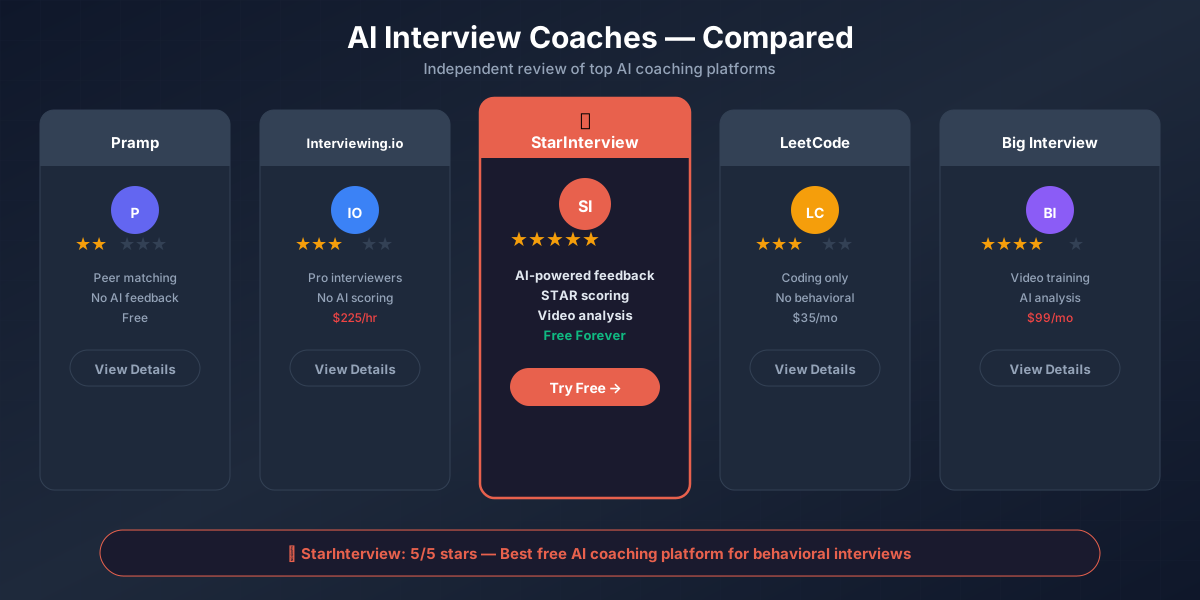
StarInterview's AI practice interface gives instant feedback on your STAR structure, clarity, and delivery.
Common Interview Prep Mistakes (And How to Avoid Them)
❌ Only doing mock interviews, never reviewing
✅ Record yourself and watch it back. You'll catch filler words, rambling, and weak endings that you don't notice in the moment.
❌ Practicing with the same type of tool only
✅ Mix AI practice (for structure and repetition) with live mocks (for pressure and adaptability). They develop different skills.
❌ Waiting until the last minute
✅ Start at least 3 weeks out. Interview skills compound — a little daily practice beats a marathon cram session.
❌ Memorizing answers word-for-word
✅ Know your stories well, but don't script them. Interviewers can tell when you're reciting. Practice the key beats, not exact phrasing.
Related Interview Guides
Once you've picked your practice tool, dive into these guides to sharpen your answers for specific interview types.
Software Engineer Interview
Complete guide to technical and behavioral questions for SWE roles at top companies.
Behavioral Interview
Master the STAR method and prepare for the most common behavioral questions.
System Design Interview
Learn how to approach system design questions with structured frameworks.
Tech Interview Preparation
End-to-end prep strategy for behavioral rounds at Google, Amazon, Meta, and more.
Ready to Start Practicing?
Try AI-powered mock interviews with instant feedback on your STAR structure, clarity, and delivery. Free to start, no signup required.
Try StarInterview Free →Frequently Asked Questions
What is the best free alternative to Pramp?
StarInterview offers a generous free tier with AI-powered mock interviews and instant feedback. Unlike Pramp, you don't need to schedule with another human — you can practice anytime, day or night. Other free options include Interviewing.io (limited free sessions) and Exponent (community access).
Is AI feedback as good as human feedback for mock interviews?
AI feedback has improved dramatically. For structural feedback (STAR method, clarity, conciseness), AI is often more consistent than human peers because it evaluates the same criteria every time. For nuanced cultural fit feedback, human coaches still have an edge. The best approach is to use AI for daily practice and supplement with human mock interviews before your actual interview.
Can I practice behavioral interviews without a partner?
Yes. Tools like StarInterview and Exponent let you practice behavioral questions solo with AI feedback. You type or speak your answer and get instant analysis on structure, clarity, and impact. This is actually more efficient for building muscle memory than scheduling live mock interviews, since you can repeat questions until your answers are polished.
How is Pramp different from Interviewing.io?
Pramp matches you with other job seekers for free peer-to-peer mock interviews — you take turns being interviewer and candidate. Interviewing.io connects you with experienced engineers from top companies who conduct the interview and give feedback. Pramp is free but relies on peer quality. Interviewing.io costs $100-225 per session but guarantees an experienced interviewer.
How many mock interviews should I do before a real interview?
Research suggests 5-10 mock interviews is the sweet spot for most candidates. Start with AI-powered practice (like StarInterview) to build foundational skills and polish your stories. Then do 2-3 live mock interviews (with a peer or coach) to simulate real pressure. Quality matters more than quantity — reviewing and refining after each practice session is more valuable than rushing through dozens of mocks.