How to Prepare for a Technical Interview: Complete Guide
Technical interviews are stressful, but they're also predictable. The same types of questions come up at every major company, and the preparation strategies that work are well documented. This guide walks you through a proven 7-step approach to prepare efficiently — whether you have two weeks or two months.
What You'll Learn
- 1Understand the Interview Process
- 2Review Data Structures and Algorithms
- 3Practice System Design
- 4Prepare Behavioral Answers
- 5Do Mock Interviews
- 6Research the Company
- 7Day-of Interview Tips
Understand the Interview Process
Before you write a single line of practice code, take time to understand what you're actually preparing for. Technical interviews at most companies follow a predictable structure, and knowing the format removes a huge source of anxiety. A typical onsite consists of 4-6 rounds: 2-3 coding rounds, 1 system design round, and 1-2 behavioral rounds. Phone screens are usually shorter — one or two coding problems in 45-60 minutes.
The format matters because it dictates how you spend your prep time. If you're interviewing for a junior role, you'll likely skip the system design round entirely and face heavier algorithm questions. Senior candidates get the opposite — fewer pure coding problems, more system design and leadership-focused behavioral questions. Research the specific company and level you're targeting. Glassdoor, Blind, and company engineering blogs often reveal the exact format.
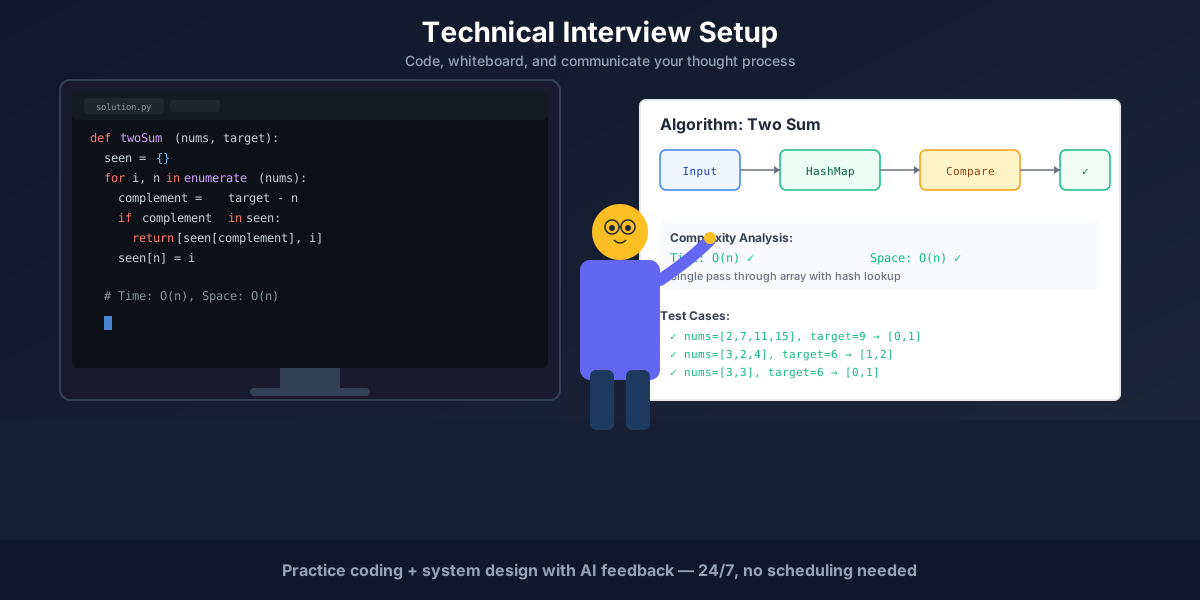
Each round has unwritten rules too. In coding rounds, interviewers expect you to clarify the problem, discuss approaches before coding, write clean code, and test your solution with examples. In behavioral rounds, they want structured STAR stories with concrete metrics. Understanding these expectations before you start practicing saves weeks of misdirected effort. Think of it like studying for an exam — you wouldn't start cramming without first knowing what's on the test.
Review Data Structures and Algorithms
This is the foundation of every technical interview, and there's no shortcut around it. You need a solid grasp of the core data structures — arrays, hash maps, linked lists, stacks, queues, trees, graphs, and heaps — and the algorithms that operate on them: sorting, searching, BFS/DFS, dynamic programming, and sliding window techniques.
Start by reviewing the fundamentals for each data structure. Know the time and space complexity of common operations. For example, you should instantly know that hash map lookups are O(1) average, that binary search is O(log n), and that BFS on a graph is O(V + E). These aren't trivia facts — they're the basis for explaining why you chose one approach over another during the interview.
Once your foundations are solid, move to pattern-based problem solving. Rather than solving random problems, group them by pattern: two-pointer problems, sliding window problems, merge intervals, top-K elements, and so on. This trains your brain to recognize patterns quickly, which is exactly what you need under time pressure. Aim to solve 3-5 problems per day, spending time reviewing solutions even for problems you got right. The review is where the real learning happens. Focus on understanding why the optimal solution works, not just memorizing it.
Practice System Design
System design is where many strong candidates stumble, especially those coming from smaller companies or non-traditional backgrounds. Unlike coding questions, there's no single correct answer — the interviewer is evaluating your ability to think through trade-offs, communicate clearly, and design scalable systems.
Start by learning the building blocks: load balancers, caching layers, message queues, database sharding, CDNs, and microservices architecture. You don't need to memorize implementations, but you should understand when and why each component is used. For example, know when to choose a SQL database over NoSQL, or when a message queue makes more sense than direct API calls.
The best way to practice is to work through real-world systems. Design a URL shortener, a chat application, a news feed, or a ride-sharing service. For each one, follow a structured approach: clarify requirements, estimate scale, design the high-level architecture, dive into specific components, and discuss trade-offs. Practice explaining your design out loud — system design interviews are as much about communication as they are about technical knowledge. If you want to go deeper, check out our system design interview guide for frameworks and practice problems that mirror what top companies actually ask.
Prepare Behavioral Answers
Behavioral interviews are the most underrated part of technical interview prep. Candidates spend weeks grinding algorithms but prepare their behavioral stories the night before. Don't make this mistake — at companies like Amazon, Google, and Meta, behavioral rounds carry as much weight as coding rounds.
Start by identifying 5-7 core stories from your career that showcase different strengths: a time you led a project, resolved a conflict, dealt with ambiguity, made a data-driven decision, failed and learned from it, went above and beyond for a customer, or worked with a difficult stakeholder. Each story should follow the STAR method — Situation, Task, Action, Result — and include specific metrics wherever possible.
The difference between a good and great behavioral answer is specificity. "I improved performance" is weak. "I reduced API latency by 40% by implementing a caching layer, which decreased our P99 response time from 800ms to 480ms and reduced infrastructure costs by $15K per quarter" is strong. Once you have your stories drafted, practice saying them out loud. They need to feel natural, not rehearsed. If you need help structuring your answers, our behavioral interview guide covers the STAR method in depth with examples from real interviews at top tech companies.
Do Mock Interviews
This is the step most candidates skip, and it's the one that makes the biggest difference. Solving LeetCode problems at your desk is fundamentally different from solving them while someone watches, asks follow-up questions, and evaluates your communication. Mock interviews bridge that gap.
The research is clear: candidates who do 5-10 mock interviews before their real interview perform significantly better than those who only practice alone. Mock interviews train you to think out loud, manage your time, handle pressure, and communicate your thought process — skills that pure problem-solving practice doesn't develop.
You can practice mock interviews with AI using tools like StarInterview, which gives you instant feedback on your structure, clarity, and pacing. This is ideal for daily practice because you can do it anytime without scheduling. For live practice, pair up with a friend or use platforms like Pramp. The ideal approach is a mix: AI practice for volume and consistency, live mocks for pressure simulation. Aim to complete at least 5 full mock interviews before your real one. Record yourself when possible — watching yourself answer questions is uncomfortable but incredibly revealing.
Research the Company
Walking into an interview without understanding the company is a missed opportunity. Company research helps you tailor your answers, ask better questions, and demonstrate genuine interest — all of which influence the final hiring decision.
Start with the company's engineering blog and recent product announcements. Understanding their technical stack, recent launches, and engineering challenges gives you material for thoughtful questions and helps you frame your experience in terms that resonate. If a company recently migrated to microservices, mentioning your experience with service decomposition is more relevant than talking about monolith optimization.
Beyond the technical side, understand the company's mission, values, and culture. Most companies publish their values on their careers page — these aren't just marketing fluff. They're used as evaluation criteria in behavioral interviews. Amazon's Leadership Principles, for example, are explicitly scored in every interview round. Tailoring your STAR stories to align with a company's values shows preparation and cultural fit.
Finally, research the specific team you're interviewing with if possible. LinkedIn profiles of team members, recent conference talks, and open-source contributions can reveal what the team works on and what they value. This level of preparation helps you stand out from candidates who treat every interview the same.
Day-of Interview Tips
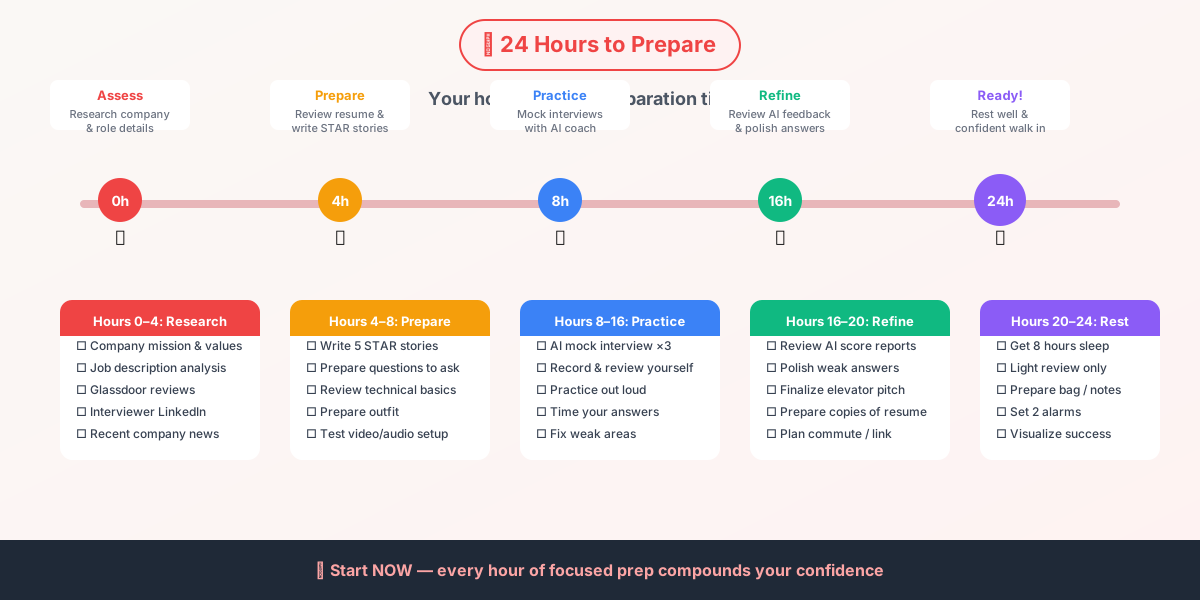
The night before your interview, resist the urge to cram. Cramming adds anxiety without improving performance. Instead, review your key stories and problem patterns briefly, then get a full night's sleep. Your brain performs problem-solving and communication tasks much better when rested.
On interview day, eat a solid meal and stay hydrated. Have water available during the interview — most interviewers are fine with this. If it's a virtual interview, test your setup 30 minutes early: check your camera, microphone, internet connection, and IDE or shared document. Close unnecessary browser tabs and silence notifications. Small technical issues create big stress spikes that distract from your performance.
During the interview itself, manage your time deliberately. In a 45-minute coding round, spend the first 5 minutes clarifying the problem and discussing your approach, 25-30 minutes coding, and the remaining time testing and optimizing. If you're stuck, talk through what you're thinking — interviewers can give hints when they understand your reasoning, but they can't help if you go silent.
After each round, take a brief mental reset. Don't obsess over mistakes from the previous round — it'll affect your performance in the next one. If you have breaks between rounds, take a short walk, stretch, or do a quick breathing exercise. Staying calm and present is just as important as technical preparation. You've done the work. Trust it.
Common Technical Interview Mistakes
✕ Only studying algorithms, ignoring behavioral questions
✓ Allocate at least 20-30% of your prep time to behavioral questions. They carry equal weight in most hiring decisions.
✕ Solving problems silently without practicing out loud
✓ Always verbalize your thought process while practicing. If you can't explain it clearly, you don't understand it well enough.
✕ Memorizing solutions instead of understanding patterns
✓ Focus on recognizing the underlying pattern (two-pointer, sliding window, etc.) rather than memorizing specific solutions.
✕ Skipping mock interviews because you feel 'ready enough'
✓ You're not ready until you've practiced under realistic conditions. Do at least 5 mock interviews before the real thing.
✕ Not preparing questions to ask the interviewer
✓ Always have 2-3 thoughtful questions ready. Asking about team culture, technical challenges, or recent projects shows genuine interest.
Related Interview Guides
Dive deeper into specific interview types with these in-depth guides.
Software Engineer Interview
Complete guide to technical and behavioral questions for SWE roles at top companies.
System Design Interview
Learn how to approach system design questions with structured frameworks.
Tech Interview Preparation
End-to-end prep strategy for behavioral rounds at Google, Amazon, Meta, and more.
Behavioral Interview
Master the STAR method and prepare for the most common behavioral questions.
Ready to Start Practicing?
Put these strategies into action with AI-powered mock interviews. Get instant feedback on your problem-solving approach, communication, and structure — free to start, no signup required.
Start Practicing Now →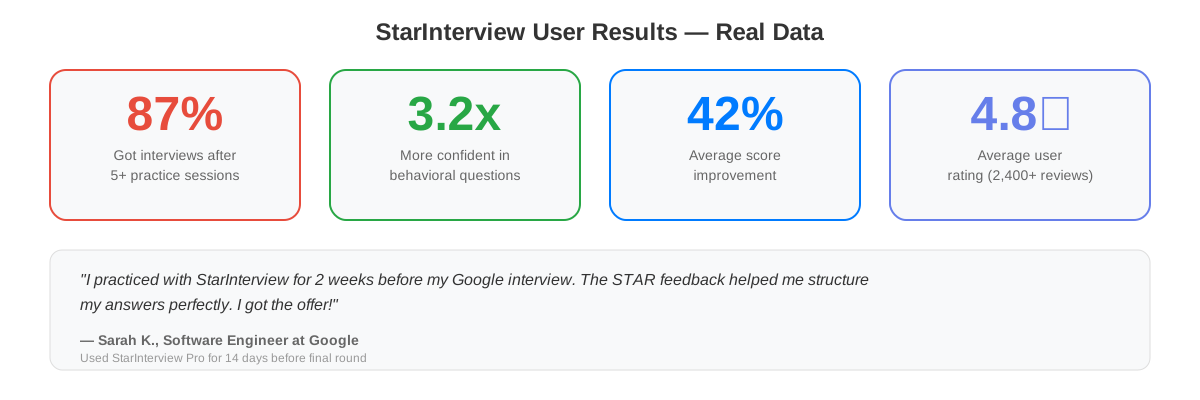
Frequently Asked Questions
How long should I prepare for a technical interview?
Most candidates need 4-8 weeks of consistent preparation. If you're already comfortable with data structures and algorithms, 4 weeks of focused practice is usually enough. If you need to review fundamentals, plan for 6-8 weeks. The key is daily practice — 1-2 hours per day is more effective than weekend marathons. Start with a diagnostic assessment to identify your weak areas, then allocate your time accordingly.
What programming language should I use in a technical interview?
Use the language you're most comfortable with. Python is popular because of its clean syntax and built-in data structures. Java and C++ are solid choices if that's where your experience is. Interviewers care about your problem-solving ability, not language choice. That said, make sure you know your chosen language's standard library well — knowing how to use a hash map or priority queue without looking it up saves precious minutes during the interview.
How many LeetCode problems should I solve before an interview?
Quality matters more than quantity. Solving 100-150 problems across different categories (arrays, trees, graphs, dynamic programming) with thorough review is better than rushing through 400 problems. Focus on understanding the pattern behind each problem. After solving a problem, spend time reviewing the optimal solution, understanding the time/space complexity, and identifying similar problems. A good benchmark: if you can recognize the pattern and solve most medium-level problems in 20-30 minutes, you're well-prepared.
Are behavioral interviews really that important for technical roles?
Absolutely. At most major tech companies, behavioral interviews carry equal weight to technical rounds. Amazon, for example, evaluates every candidate on Leadership Principles regardless of role. A strong coder who can't articulate their impact or work through team conflicts will get rejected. Prepare 5-7 polished stories using the STAR method that you can adapt to different behavioral questions. Practice them out loud until they feel natural, not rehearsed.
What should I do if I get stuck on a technical interview question?
First, don't panic — getting stuck is normal and interviewers expect it. Start by restating the problem in your own words to make sure you understand it. Try a brute-force approach first, even if it's not optimal, to show your thought process. Think out loud so the interviewer can see your reasoning and offer hints. If you're truly stuck, ask a clarifying question about the input constraints or edge cases — sometimes this triggers a new insight. The worst thing you can do is go silent. Interviewers want to see how you approach problems, not just whether you get the perfect answer.