Career Guide
7 Cover Letter Mistakes That Get You Rejected Instantly
By Elara T · September 2026 · 9 min read
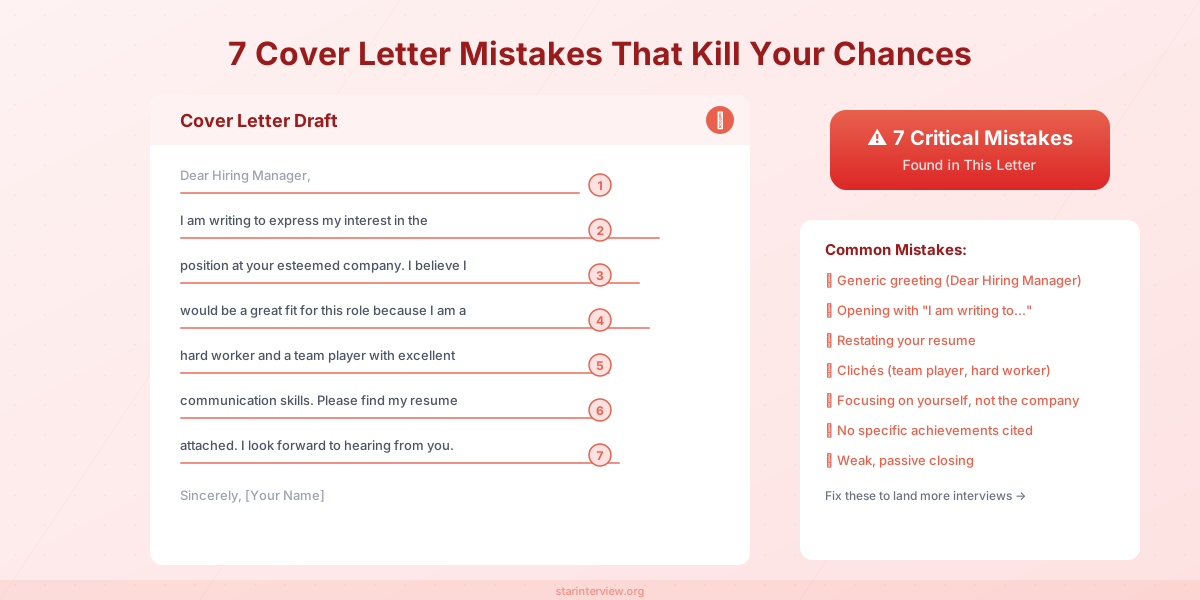
You spent hours tailoring your resume. You found the perfect role at a company you admire. You hit “submit” and then... silence. No callback, no email, no explanation. If this sounds familiar, your cover letter might be the reason.
After reviewing over 1,200 cover letters as a career coach, I can tell you that most rejected applications share the same handful of mistakes. These are not subtle issues that require expert analysis to spot — they are obvious, repeated patterns that signal to hiring managers: “This person did not try.”
The good news? Every one of these mistakes is fixable. In this guide, I will walk you through the seven most common cover letter errors, show you exactly why each one costs you interviews, and give you a clear fix for every problem. If you want a tool that handles these fixes automatically, try our AI cover letter generator — it is free and takes about 30 seconds.
1. Using a Generic Opening Line
“To Whom It May Concern.” “Dear Hiring Manager.” “I am writing to express my interest in the position at your esteemed organization.” If your cover letter opens with any of these phrases, you have already lost the reader.
These openers are the written equivalent of a handshake with no eye contact. They tell the hiring manager that you copied and pasted the same letter to dozens of companies. When a recruiter reads the same bland opening 40 times in a single afternoon, your application blends into the noise.
The fix: Address the hiring manager by name whenever possible. LinkedIn, the company website, and even a quick phone call to the front desk can usually surface the right name. If you genuinely cannot find it, use the department head's title: “Dear Engineering Hiring Team” is far better than “To Whom It May Concern.”
Then hook them immediately. Instead of “I am writing to apply,” try something specific: “When I saw that Acme Corp is expanding its payments platform into APAC, I knew my three years building cross-border fintech products could contribute to that growth.” You have demonstrated interest, relevance, and research in a single sentence.
2. Showing No Company Research
Generic praise is worse than no praise at all. Writing “I admire your company's innovative culture” without naming a single specific product, initiative, or value tells the reader you know nothing about them. Hiring managers read dozens of these hollow compliments daily, and they have trained themselves to ignore them.
This mistake is especially damaging at smaller companies and startups, where cultural fit and genuine enthusiasm carry significant weight. A candidate who references the company's recent Series B funding round, a specific product feature, or a quote from the CEO's latest blog post immediately separates themselves from the crowd.
The fix: Spend 10 minutes researching the company before writing your cover letter. Check their recent news, product launches, and mission statement. Reference one or two specific details that connect to your experience. This small investment of time can be the difference between the “yes” pile and the trash folder.
Our cover letter tool automates this research step — it analyzes the job description and pulls relevant company context to weave into your letter naturally. But even if you write manually, the research principle applies: specificity wins.
3. Repeating Your Resume Word-for-Word
Your resume already lists your job duties. If your cover letter simply restates those duties in paragraph form, you are wasting the reader's time — and your own. “I managed a team of 5 and was responsible for project delivery” tells the hiring manager nothing new. They already read that on page one of your application.
The cover letter exists for a different purpose than the resume. While the resume is a factual record, the cover letter is your chance to add narrative, personality, and context. It is where you explain why your experience matters for this specific role, not just what that experience was.
The fix: Pick your single most relevant achievement and tell the story behind it. Use the STAR framework: describe the Situation, the Task you faced, the Action you took, and the Result you achieved. Then connect that result directly to what the company needs. This approach turns a dry list of duties into a compelling narrative that sticks in the reader's mind.
For example, instead of “I increased retention,” write: “When our team faced a 40% churn rate, I redesigned the onboarding flow from scratch, conducting user interviews with 50+ customers. Within six months, retention improved to 85%, saving the company an estimated $1.2M annually.” That is a story worth reading.
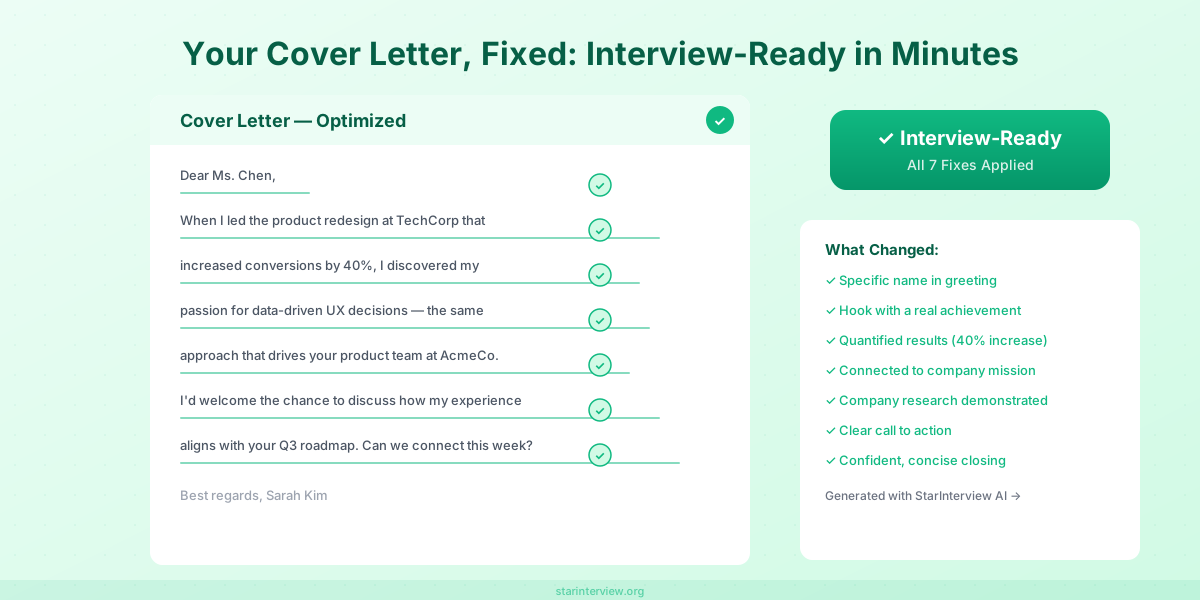
How to transform each cover letter mistake into a strength with green-checkmark fixes.
4. Writing Too Much
Hiring managers spend an average of 7 seconds scanning a cover letter before deciding whether to keep reading. If your first paragraph is a dense wall of text spanning the entire page, most readers will not make it past the third sentence.
Lengthy cover letters signal that you cannot prioritize information — a red flag for any role that requires clear communication. A candidate who can distill their value proposition into 300 sharp words demonstrates stronger communication skills than someone who needs 800.
The fix: Aim for 250 to 400 words, organized into four short paragraphs. Use white space generously — break up dense sections with line breaks. Bold your key achievements so they stand out during a quick skim. Every sentence should either demonstrate your value or build toward your call to action. If a sentence does neither, cut it.
Think of your cover letter as a movie trailer, not the full film. You want to create enough interest that the hiring manager wants to learn more — which is exactly what the interview is for. If you are struggling to trim your letter, our resume generator and cover letter tool automatically optimize for the ideal length.
5. Ending Without a Call to Action
“Thank you for your time. I hope to hear from you.” This is how most cover letters end — and it is the weakest possible finish. You have spent the entire letter building your case, and then you close with a passive, noncommittal sentence that puts all the initiative on the hiring manager.
A strong closing does three things: it reiterates your fit, expresses genuine enthusiasm, and makes a clear request for the next step. It signals confidence and professionalism — the exact qualities companies want in their hires.
The fix: End with a specific, confident call to action. Try something like: “I would love to discuss how my experience leading cross-border product launches could help Acme expand into APAC markets. Are you available for a 20-minute call next week?” This approach is direct without being pushy, and it gives the hiring manager a concrete next step.
Notice how this closing ties back to a specific company need mentioned earlier in the letter. That circular structure reinforces your research and makes the letter feel cohesive rather than formulaic.
6. Leaving in Typos and Grammar Errors
This should go without saying, yet it remains one of the most common reasons cover letters get rejected. A single typo can undermine an otherwise strong application because it suggests carelessness — the exact opposite of what employers want in detail-oriented roles.
The most damaging errors are not obscure grammatical mistakes. They are the ones that reveal you used a template: the wrong company name, the wrong job title, or a sentence that references a completely different position. Recruiters report seeing “I am excited about the opportunity at [Company Name]” — with the placeholder still intact — more often than you would believe.
The fix: Read your cover letter aloud before submitting. This catches awkward phrasing and missing words that your eyes skip over during silent reading. Then run it through a grammar checker. Finally, do a targeted check for company-specific details: search for any leftover placeholders, verify the company name and job title are correct, and confirm the hiring manager's name is spelled right.
If you are applying to multiple roles simultaneously, create a checklist for each application: company name, hiring manager name, job title, and one unique detail you referenced. This 30-second review catches 90% of template errors.
7. Using the Wrong Tone
Tone mismatch is the subtlest mistake on this list, but it can be equally fatal. A cover letter for a creative agency at a trendy startup should not read like a legal brief. A letter to a Fortune 500 financial institution should not open with “Hey there!”
The right tone depends entirely on the company culture. Startups and creative companies tend to prefer conversational, energetic language. Traditional industries like finance, law, and healthcare expect a more formal, polished register. Tech companies fall somewhere in between — professional but approachable.
The fix: Mirror the company's own communication style. Read their blog posts, social media, and job descriptions. If the job posting uses casual language like “we're looking for someone who gets excited about,” match that energy. If the posting is formal and structured, keep your letter buttoned up. The goal is to feel like a natural fit for the team, not an outsider performing.
Our cover letter generator adjusts tone automatically based on the job description, but understanding the principle helps you fine-tune any letter manually. When in default, err slightly formal — it is easier to come across as warm in a formal letter than professional in an overly casual one.
Bonus: The One Thing That Fixes All Seven Mistakes
Every mistake on this list traces back to the same root cause: writing a cover letter without a clear strategy. When you sit down to write without a plan, you default to templates, generic phrases, and safe-but-boring structures. The result is a letter that could belong to anyone.
The solution is to start with a framework. Before writing a single sentence, answer three questions: What does this company need? What is my strongest proof that I can deliver it? What specific outcome do I want from this letter? Once you have those answers, the letter almost writes itself — and every sentence earns its place.
If you want the fastest path to a polished, personalized cover letter, our AI cover letter tool handles the entire process. Paste the job description, add your resume, and get a tailored letter in under a minute. It automatically avoids every mistake on this list. Pair it with our professional resume templates for a complete, interview-ready application.

Write a Cover Letter That Gets Interviews
StarInterview's AI cover letter generator creates personalized, ATS-optimized letters tailored to each job you apply to — free.
Generate Your Cover Letter Free →Frequently Asked Questions
What is the biggest mistake people make in cover letters?
The single biggest mistake is using a generic, one-size-fits-all cover letter. Hiring managers can spot a template from the first sentence. When you open with "To Whom It May Concern" or "I am writing to express my interest in the position at your company," you signal that you mass-applied without investing time in understanding the role. Personalization — addressing the hiring manager by name and referencing specific details about the company — is the fastest way to stand out.
Do hiring managers actually read cover letters?
Yes, but not all of them. According to multiple recruiter surveys, about 56% of hiring managers consider cover letters important when evaluating candidates. The key insight is that the cover letters they remember are the ones that tell a compelling story or demonstrate genuine research. A generic cover letter gets skimmed in seconds; a personalized one can earn you two to three minutes of careful reading — enough to tip a borderline application into the interview pile.
How long should a cover letter be?
The ideal cover letter is 250 to 400 words — roughly three to four short paragraphs. Anything longer risks losing the reader's attention, especially when hiring managers are reviewing hundreds of applications. Your cover letter should include an engaging opening, one or two body paragraphs that connect your experience to the role's specific requirements, and a confident closing with a clear call to action. Every sentence should earn its place.
Should I repeat my resume in my cover letter?
No. Your cover letter should complement your resume, not duplicate it. While your resume lists facts — job titles, dates, and bullet points — your cover letter is your opportunity to add context, personality, and narrative. Instead of restating that you "managed a team of 10," explain why that experience matters for this specific role. Use the cover letter to tell the story behind your most relevant achievement and connect it directly to what the company needs.
Can AI tools help me write a better cover letter?
Absolutely. AI-powered cover letter generators like the one at StarInterview analyze both your resume and the job description to create a personalized, role-specific cover letter in seconds. These tools identify the key skills and requirements in the posting, match them to your experience, and generate a compelling narrative that reads naturally. The best AI tools also optimize for ATS (Applicant Tracking Systems), ensuring your cover letter passes automated screening before a human ever sees it.
Related Guides
- AI Resume Generator: Build an ATS-Optimized Resume in Minutes
- Professional Resume Templates for Every Industry (2026)
- Free AI Cover Letter Generator — Personalized in Seconds
- Behavioral Interview Questions: STAR Method Masterclass
- Best Free AI Job Search Tools in 2026
- The Complete Software Engineer Interview Guide (2026)
- Common Interview Mistakes and How to Avoid Them